
In this guide, we answer some of the most common questions parents have about swimming lessons for 3 and 4-year-olds. We look at the best age to start swimming lessons, what preschoolers learn in their classes, how to teach a young child to swim, swimming games you can try together and what you can do outside lessons to help build their confidence.
You can even follow the swimming journey of Cindy’s daughter Kaia, who started working towards Stage 1 at three years old, to see what learning to swim at this age can really look like.
Frequently Asked Questions about Preschool Swimming Classes
Click the question to jump to our answer!
- Is 3 or 4 years old the right age to start swimming lessons?
- What should a 3 year-old be to do in swimming?
- What should a 4 year-old be to do in swimming?
- What do preschoolers learn in swimming lessons?
- How to teach 3 and 4-year-olds to swim.
- How can I help my 3 or 4-year-old become more confident in the water?
- Can I teach a preschooler to learn how to swim?
- Should my preschooler use armbands or flotation aids?
- Swimming games for 3 and 4 Year olds
- Swimming lesson plan ideas for preschoolers
- What are the benefits of preschool swimming lessons?
- What should preschoolers wear for swimming lessons?
- Do I need to accompany my preschooler in the water during lessons?
Is 3 or 4 years old the Right Age to Start Swimming Lessons?
Yes! Ages 3 and 4 are a great time to start structured swimming lessons. At this stage, children develop motor skills, coordination, and confidence in the water. Early swimming lessons also promote water safety and lay the foundation for future swimming proficiency.
What Should a 3 Year-Old Be Able to Do in Swimming?
There isn’t a set swimming ability that every 3-year-old should have reached.
Some 3-year-olds may have been swimming since they were babies and be extremely confident in the water. Others might be going to a swimming pool for the very first time.
However, at this age, many children are beginners in swimming. They should be developing basic water confidence, learning to float, kick, and control their breath. Some preschoolers may already feel comfortable putting their faces in the water, while others are still getting used to splashing and moving around.
A 3-year-old might begin working on skills such as:
- Getting in and out of the swimming pool safely
- Feeling comfortable with water on their face
- Blowing bubbles in the water
- Putting their face under the water
- Floating on their front and back with support
- Kicking their legs
- Jumping into the pool with help
- Moving through the water using a noodle
- Beginning to move short distances with less support
Don’t worry if your child can’t do all of these yet. Children develop at very different rates, and confidence in the water is just as important as physical swimming ability.
Watch 3-year-old Kaia, on her journey to Stage 1. See how she builds confidence and masters new skills like jumping in, floating on her back, and even diving!
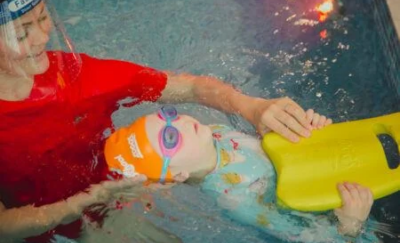
See Kaia's swimming journey
What Should a 4-Year-Old Be Able to Do in Swimming?
As with 3-year-olds, there is no particular swimming level every 4-year-old should have reached.
A child who started lessons as a baby may already be swimming short distances independently, while another 4-year-old may still be learning to put their face in the water. Both are completely normal starting points.
At four, children can continue developing their floating, kicking, breathing and water confidence while gradually becoming more independent.
Depending on their experience, they may begin working towards:
- Floating independently on their front and back
- Swimming short distances on their front and back
- Improving their kicking technique
- Putting their face in the water confidently
- Controlling their breathing and blowing bubbles
- Jumping into the water safely
- Moving through the water without holding onto an adult
- Beginning to develop basic swimming stroke technique
At Cindy’s, our preschoolers follow our Learn to Swim Programme. Their first goal is to swim 5 metres with a noodle to earn their 5-metre badge before progressing to their Stage 1 Certificate.

What Do Preschoolers Learn In Swimming Lessons?
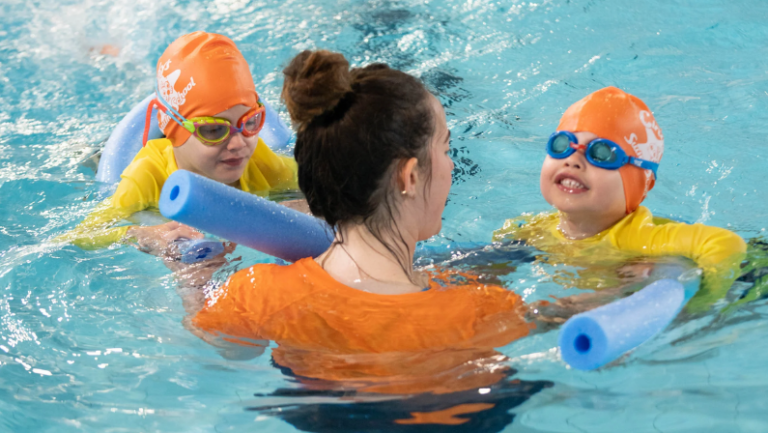
The main goal for preschoolers during our swimming lessons is to help each child build confidence and independence in the water. Our lessons are a mix between fun and learning. Some skills they learn include:
- Entering and exiting the pool safely
- Water confidence and safety
- Getting used to water submersion and blowing bubbles.
- Floating like a starfish on their front and back. Firstly with a noodle or with help from a teacher and then as unaided as possible.
- Jumping into the water!
- Basic stroke technique
- Swimming 5 metres on front and back. Firstly with a noodle and then as unaided as possible.
You can see exactly what they learn during stage 1 here.

How To Teach 3 and 4-Year-Olds to Swim
If you do decide you want to teach your preschooler to swim or want to supplement their swimming lessons, the best place to start isn’t with perfect swimming strokes. Start by helping them feel safe, happy and confident in the water.
Here are some simple steps you can practise together:
Start with water play to build confidence. Start with simple water play. This could even begin in the bath at home or sitting on the side of the pool. The goal is to get them comfortable with the sensation of water on their skin and around their faces, reducing any potential fear or anxiety. Play some water games, sprinkle water on their faces, blow bubbles in the water and make it fun!
Practise putting their face in the water. Being comfortable with their face in the water is an important step towards learning to swim. Start gently. Encourage your child to blow bubbles with their mouth close to the surface and gradually progress to putting more of their face into the water. Games can make this much less intimidating. Try putting your fingers underneath the water and asking your child to look under the surface and tell you how many fingers you’re holding up.
Teach floating and kicking before introducing strokes. Before introducing complex swim strokes, focus on the fundamentals: floating and kicking. Start by teaching them how to float on their backs. You can support them gently, gradually reducing your assistance as they gain confidence. For kicking, have them hold onto the side of the pool or a kickboard while practising their leg movements. Make sure they understand the importance of a strong and consistent kick for propulsion.
Use songs and games to make lessons fun. Young children learn best through play. Incorporate songs, rhymes, and water games into your lessons.
Keep instructions simple and repetitive. Preschoolers have short attention spans. Give simple, easy-to-understand instructions. Repetition is key. Repeat instructions and demonstrate the movements multiple times. Be patient and understanding if they don’t get it right away.
Provide plenty of encouragement and reassurance. Positive reinforcement is crucial. Offer plenty of praise and encouragement for even the smallest achievements. If they’re struggling or feeling scared, reassure them that it’s okay and that they’re doing great.
Can I Teach My Preschooler to Swim Myself?
Yes, it certainly is possible to teach a preschooler to learn how to swim. However, we would recommend swimming lessons as the best course of action for two reasons.
Firstly, our swimming instructors are trained in the best ways to teach swimming to young children; they have lots of experience and love teaching little ones how to swim.
Secondly, teaching your own children to swim is hard! Some children will cling to mum or dad for all they’re worth. Others will test their parent’s patience more than they would dare with a formal teacher. It takes training to maintain an objective teaching approach, especially with your own children.
The best thing parents can do is support their child’s learning by taking them swimming regularly outside of swimming lessons. Then you can concentrate on having fun with your child in the pool, without the stress of teaching them. It’s a great time to practice floating and kicking with fun water activities. You can also reinforce basic water safety rules.
The other advantage of swimming lessons at Cindy’s Swim School is you get to be part of our amazing swimming community. Kids can make friends, earn badges as they progress and take part in our annual gala.
Why not pick up our stage 1 to 3 Starter Swim Kit (featured below) to support your child when you take them swimming?
Toddler Stages 1 -3
2 children : 1 teacher
For children aged 2 to 4
Daytime Weekdays · 9am–3pm
Which stage?
Toddler stage 1 – swims less than 5m unaided
Toddler stage 2 – swims 5m unaided
Toddler stage 3 – age 3.5+ and swims 10m unaided
Stages 1 -3
4 children : 1 teacher
After School / Weekends
For children aged 3½ years and above
Which Stage
Stage 1 – aged 3½+ and swims less than 5m unaided
Stage 2 – aged 3½+ and swims 5m unaided
Stage 3 – aged 3½+ and swims 10m unaided.
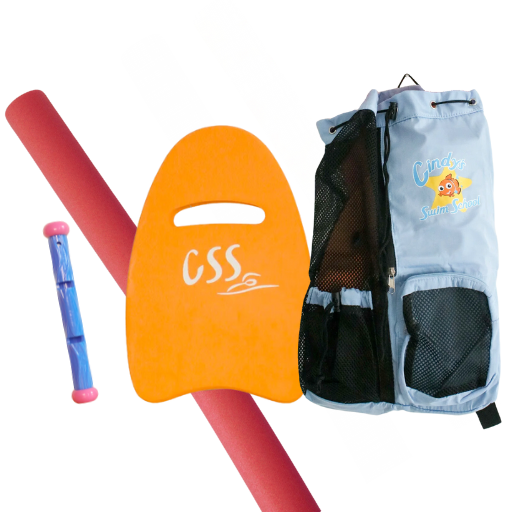
Stage 1 to 3 Starter Swim Kit
Our Junior Stage 1-3 Kit contains a pool noodle (woggle), a diving sinker, and junior kickboard all neatly stored in a swim bag in a colour of your choice.
How Can I Help My 3 or 4-Year-Old Become More Confident in the Water?
Encourage playtime in the water outside of lessons. Take them swimming with you apart from their lessons. Enjoy playing and having fun. Participating in water activities together helps build their confidence. This could include simple games like splashing, practising floating, or gently guiding them through the water. You can also have a go at practising what they learn in their swimming lessons.
Use positive reinforcement and praise. Celebrate the small achievements as well as the big ones. Cheer when they blowing bubbles or floating for a few seconds.
Checklist for Building Your Child’s Confidence
- Praise effort rather than just achievement
- Celebrate small improvements
- Stay calm if your child is nervous
- Avoid forcing them to do something they’re frightened of
- Visit the pool regularly if possible
- Let them practise familiar skills
- Keep swimming enjoyable
Stay patient and avoid pressure. A child who doesn’t want water near their face one week might happily blow bubbles a few weeks later. Every child progresses at their own pace, so let them take their time.
Should Preschoolers Use Armbands or Flotation Aids?
Water safety is a top priority in our lessons, which is why we avoid using armbands and similar flotation devices. These can give young children a false sense of buoyancy, making them believe they can float unaided when they actually cannot.
To ensure they develop real water confidence and essential safety skills, we use noodles and kickboards instead. These provide support only when necessary, and they strengthen balance skills, helping children learn to move through the water safely and independently.
Swimming Games for 3 and 4 Year Olds
There are plenty of songs and games you can use to make swimming for preschoolers fun. Here are some ideas:
Humpty Dumpty: This is a great game to increase children’s confidence when getting into the water. Kids sit or stand on the pool edge, sing the rhyme, and then are either lifted into the water, jump in or are caught by an adult.
How Many Fingers?: Play this game in shallow water with your child wearing goggles. They start by taking a deep breath, looking down from the water’s surface, and counting the number of fingers you hold underwater. Gradually increase the difficulty by having them fully submerge their face and head before counting the fingers.
Car Wash: this is a good game to help you child get used to having water on their face. Preschoolers move through the water with an adult and have water sprinkled on their face (pretending they are a car at the car wash). You can move onto blowing bubbles and finally submerging their face into the water..
Horse Race: Children can sit on a noodle like they are pretending to ride a horse and move through the water. This can be done independently or with an adult.
Swimming Lesson Ideas for Preschoolers
If you want some ideas for planning swimming lessons for your child here are some simple suggestions:
Floating games to develop balance: pretend to be a starfish or float like a jellyfish.
Blowing bubbles for breath control: turn part of the lesson it into a fun game of who can blow the most bubbles.
Practising safe entries and exits: jump in with assistance or climb out using the poolside. When they become more confident have a fun jumping session at the end of your lesson as a reward for their progress.
Using noodles for independent movement: let them pretend they are riding a horse or spaceship.
What Are the Benefits of Preschool Swimming Lessons?
Taking preschoolers swimmming has so many benefits, the question is why would you not want to do it?
Develops motor skills and coordination
Encourages social skills and listening
Improves numeracy and literacy
Supports physical fitness
Reduces fear of water
Boosts independence and confidence
What Should Preschoolers Wear For Swimming Lessons?
A comfortable, well-fitted swimsuit or trunks.
Goggles – which we sell online – or just ask the office!
A swim cap – children will be given a CSS cap when you join our Children’s Learn To Swim Programme.
A swim nappy if needed – At Cindy’s we require a swim nappy and a neoprene swim nappy, which goes over the swim nappy ensuring there are no accidents in the pool!
Do I Need to Accompany My Preschooler in the Water During Lessons?
At Cindy’s, parents can accompany children during swim lessons until the age of 3.5 years old or they can start with the teacher n the pool.
We offer classes with a 2:1 and 4:1 teacher to pupil ratio lesson for preschoolers.
Parents and carers stay at the side of the pool during lessons, so you’ll still be there to watch and encourage your child as their confidence develops.
Preschool Swimming Lessons at Cindy’s Swim School
If your 3 or 4-year-old is ready to start swimming, our preschool swimming lessons are designed to help young children build confidence, independence and essential swimming skills in a fun and supportive environment.
Our small-group preschool classes are available with 2:1 and 4:1 teacher-to-pupil ratios, giving children plenty of support and attention while they learn.
It doesn’t matter whether your child is already jumping enthusiastically into the pool or is nervous about getting their face wet. We work from their individual starting point and help them develop their skills and confidence at their own pace.
Ready to get started? Contact us at Cindy’s today to ask any questions and book your preschool swimming class.