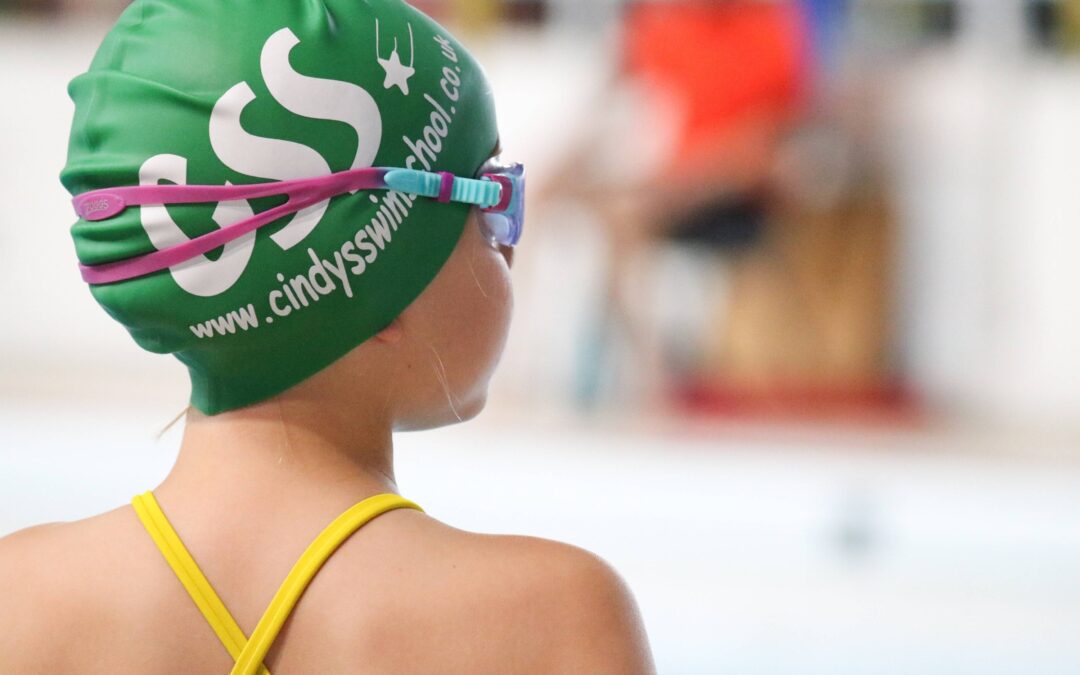
Putting a swimming cap on a child can be tricky, especially if they have long or thick hair. But with the right technique, a kid’s swimming cap should go on quickly and comfortably without pulling their hair.
In this guide, our swimming teachers explain how to put a swimming cap on a child, including some top tips for children with long hair. We’ll also look at how to choose the right swimming cap for kids, why we recommend silicone caps and the benefits of wearing a swimming hat during lessons.
Table of contents:
- How to put on a Child’s Swim Cap
- Top Tips for putting on a Swim Cap with Long Hair
- Which Type of Swimming Cap is Best for Kids
- Why We Love Swimming Caps at Cindy’s
- Cindy’s Silicone Swim School Cap
- Why are Swimming Hats Important? 7 Key Benefits
- What if My Child Doesn’t Like Wearing a Swimming Cap
- Top Tips to Encourage Your Child to Wear a Swimming Cap
- Looking for Swimming Lessons in South London?
How to put on a child’s swimming cap
- Brush your child’s hair first. Remove any tangles, particularly if they have long hair.
- Tie long hair back. Put your child’s hair into a ponytail or bun. The position of the ponytail can also help position and stabilise the goggles.
- Move their fringe away from their face. If your child has a fringe, ask them to sweep it upwards and hold it away from their forehead.
- Check the swimming cap is the right way round. If the cap has a seam running across it, position it so that the seam runs from the front of the head to the back rather than from ear to ear.
- Stretch the swimming cap between your hands. Place both hands inside the cap with your thumbs towards the front.
- Start at the forehead. Place the front of the swimming cap against your child’s forehead and gently stretch it backwards over the top of their head.
- Tuck in any loose hair. Once the cap is in position, remove your hands and gently tuck any stray hair underneath.
- Make the final adjustments. Check that the swimming cap is comfortable and fits snugly over the ears. Leave room at the forehead for goggles. The goggles need to form a seal against the skin and if the swimming cap is in the way, the goggles will leak.
Top Tips for Putting on a Swim Cap on a Child With Long Hair:
- If, like me, you or your child has very thick and/or long hair, and you cannot get a regular swimming hat to hold it all in, long hair swimming caps are available. I bought one online, and although it looks a bit retro (think 1950s synchronised swimmers), it saves the pain of swimming with very heavy wet hair.
- If your child’s hair is very long, you may want to divide it into two ponytails before putting on the swimming cap. A top knot and a lower one will create a natural ‘valley’ for the swimming goggles strap to rest.
- Avoid using sharp clips or bulky hair accessories underneath the swimming cap. Soft hairbands are usually more comfortable and less likely to damage the cap.
Which Type of Swimming Cap Is Best for Kids?
We recommend using a silicone swimming cap. Silicone caps are soft, stretchy and durable, making them easier to put on and take off than many latex caps. They are also less likely to pull on your child’s hair.
All Cindy’s Swim School caps are made from silicone.
Why we love swimming caps at Cindy’s
At Cindy’s, we love all things swimming! And swimming caps are a big part of being able to swim well and with ease, so we love them too. We have even incorporated them into our teaching programme, all new swimmers receive a cap when they start lessons with us.
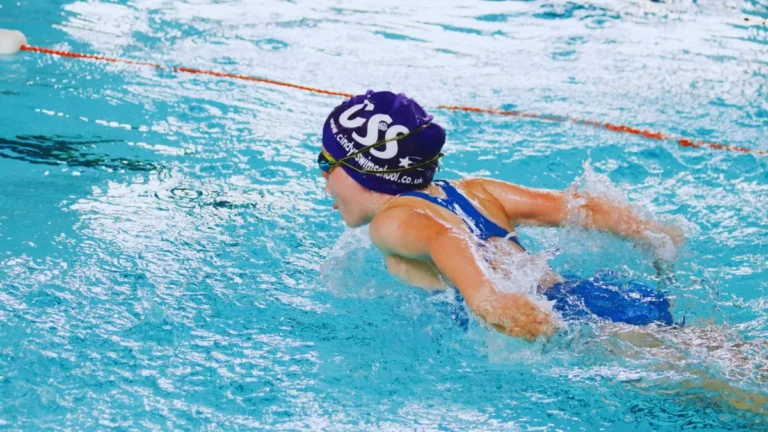
Another way we like to keep our swimmers engaged and motivated, is by providing our colour-coded caps as a mark of achievement as they progress through the different distance and stage awards. The array of colourful swimming caps splashing around in the pool always brings a smile to our faces on a busy swimming shift!
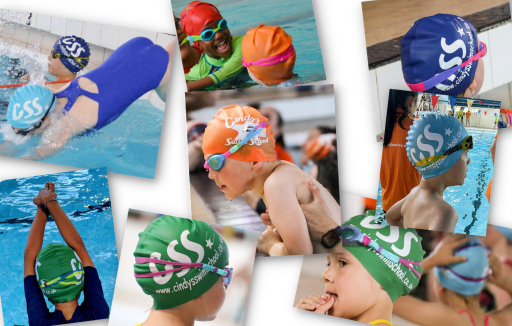
Cindy’s Silicone Swim School Cap
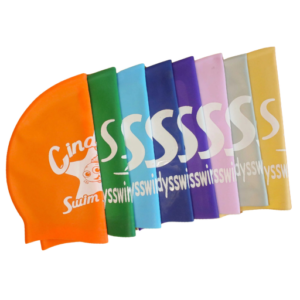
Each child who takes lessons at Cindy’s Swim School receives a complimentary swim cap.
These are high-quality, easy-to-use caps, made from silicone, which is less sticky and nicely stretchy. You can purchase them from our online shop.
£7.50
Why Are Swimming Caps Important? 7 Key Benefits
For various practical reasons of course! Here are seven benefits of wearing a swimming cap
Swimming caps help you swim faster – All you have to do is look at any professional swimmer to know that swimming caps minimise drag in the water and aid in streamline swimming. Or as we tell the kids, “A cap helps you to swim as fast as a speedboat!”
Swimming caps protect hair from chlorine – Chlorine is a disinfectant that is used to keep swimming pools clean and free of germs. However, it can also be harsh on hair, causing it to become dry, brittle, and (for very frequent swimmers) sometimes discoloured. Swimming caps help protect hair from chlorine by creating a barrier between the hair and the water.
They keep hair out of the face – Swimming caps also keep hair away from the face and eyes, which will help children see clearly and concentrate without the distraction and irritation of hair getting in the way. Tucked away hair also helps goggles to suction better onto the face, minimising leakage and swimmers fiddling with their goggles. Bonus!
They stop hair getting weighed down with water – For those blessed with thick, curly and long hair, it can get very heavy when wet. Swimming caps make swimming easier and faster (with less drag) because your hair doesn’t get fully soaked. Caps also make drying your hair after swimming a lot quicker!
Swimming caps help to keep the pool clean – Hair sheds naturally, and swimming caps help stop that hair ending up in the swimming pool filters, resulting in a lot less mess for our pool maintenance teams.
They prevent hair from getting tangled – Long hair can easily become tangled in the pool, which can be uncomfortable and painful for children (and parents) to sort out later. Swimming caps keep hair tucked away and prevent tangles in the first place.
Swimming hats can help reduce the risk of ear infections – Kids who wear swimming caps that cover their ears benefit from a layer of protection against water entering their ear canals. Whilst some children won’t like the sensation of their ears being covered because it makes their hearing a little duller, it’s worth trying, especially if they’re prone to ear trouble or have grommets. Swimmers’ ear plugs for children have come on a long way and can be very helpful if your child suffers from any of the above ear issues. Have a chat with your doctor if you feel you need them.
In summary, swimming caps for kids are important and it isn’t difficult to help children get them on quickly and gently.
What If My Child Doesn’t Like Wearing a Swimming Cap?
Some children don’t like wearing a swimming cap at first, particularly if they aren’t used to the sensation.
We find at Cindy’s Swim School that because all our pupils wear swimming hats, and it is non-negotiable, we don’t encounter much resistance to the idea. By making the caps a reward for their swimming achievements, different coloured caps carry kudos and are an incentive to swim well. We’d recommend to all parents, on holiday and at home, that you make wearing a swimming hat the norm, and not an optional extra.
Top Tips To Encourage Your Child To Wear A Swimming Cap
Parents, if your child is resistant to wearing a cap, these tips will hopefully help persuade them.
- Choose a new swimming cap (different colours or styles) as a reward for great swimming.
- Practise putting the swimming cap on at home when you’re not rushing to get into the pool.
- Make sure the cap is the right size and isn’t uncomfortably tight.
- Show them how all the best professional swimmers wear caps. Explain how they make you go faster and have more fun!
- Motivate them with an out-the-pool treat if they wear their swimming caps the whole lesson. (Talk to your swimming teacher about it, so that they can help you implement the treat incentive.)
- Ask their swimming teacher to help. We’re very experienced at encouraging hesitant swimmers to take the plunge with a cap on.
Looking for Swimming Lessons in South London?
At Cindy’s Swim School, we offer friendly, confidence-building swimming lessons in pools across South and South West London for babies, toddlers, preschoolers, children and adults.
We run lessons in areas including Brixton, Clapham, Tooting, Streatham, Southfields, Southwark and surrounding areas
We also offer private swimming lessons and holiday crash courses.
Whether it’s your little one’s first experience in the water, your child is learning to swim or developing their technique, or you’re an adult looking to improve your own swimming skills, we have lessons for a wide range of ages and abilities.